
Lee Durkee is the author of the novel The Last Taxi Driver (named a 2020 Book of the Year by Kirkus Review, The Irish Times, and Le Monde) as well as the 2023 memoir Stalking Shakespeare (described as “wickedly entertaining” by the New York Times Book Review, and “gripping, poignant, and enjoyable” by the Washington Post). His first novel Rides of the Midway was published in 2001 by WW Norton. His stories and essays have appeared in Harper’s Magazine, The Sun, The Best of the Oxford American, Zoetrope, Garden & Gun, Tin House, & Mississippi Noir. He lives in a cabin in North Mississippi.
New essays and stories: THE GHOST OF AJAX DINER (essay, Garden & Gun), DYING IN THE MATRIX (essay, Lit Hub), LITTLE GREEN MEN (essay, Southwest Review), HOSPITAL RUNS (essay, The Sun), & RIDE OR DIE (novel chapter, Harper’s Magazine).

Reviews for STALKING SHAKESPEARE (Scribner 2023)
“Captivating . . . Durkee’s zeal proves infectious, and he keeps readers hooked with his dogged sleuth-work, his radical thoughts on authorship and his insightful plotted histories of each portrait–some involving royal intrigue, unsolved murders and sinister coverups . . . his words thrill and beguile . . . a gripping, poignant, and enjoyable read.” –Malcolm Forbes The Washington Post
“Wickedly entertaining . . . packed with skulduggery and delusion . . . a gonzo detective writing with a blend of punk, wit, and adrenaline, he captures the turbulence and unnerving verve of that age better than most . . . Somehow one forgives the madder moments for the sheer brio of the writing, the sting of the jokes and razor-edge of the historical insights . . . it is really that good.” –Dominic Dromgoole, former Artistic Director of the New Globe Theater, New York Times Book Review
REVIEWS FOR THE LAST TAXI DRIVER
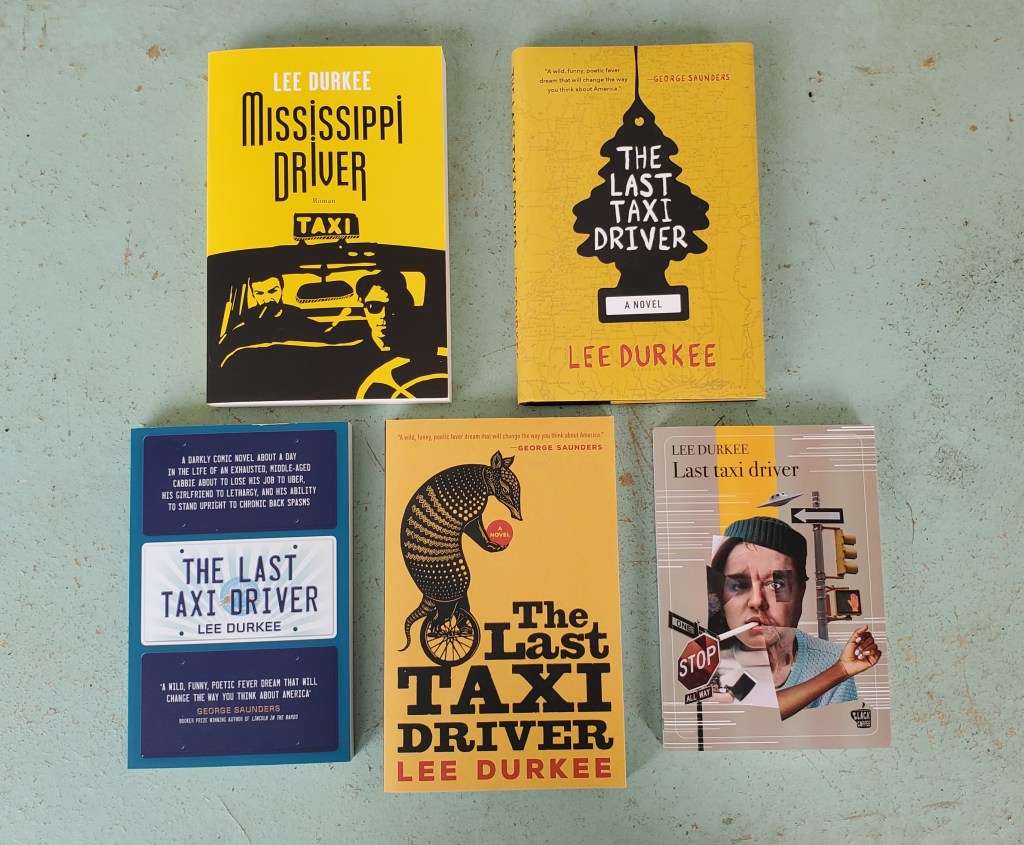
Disarmingly honest and darkly comic . . . beguiling, energetic, razor sharp prose. –New York Times Book Review
Popping pills and fulminating about the dregs of society, yet incapable of not feeling compassion for the plight of his fellow bottom-feeders, Lou Bishoff represents a masterclass in characterization, a man who recalls elements of Jim Thompson, Flannery O’Connor, Barry Gifford and John Kennedy Toole.–Declan Burke The Irish Times
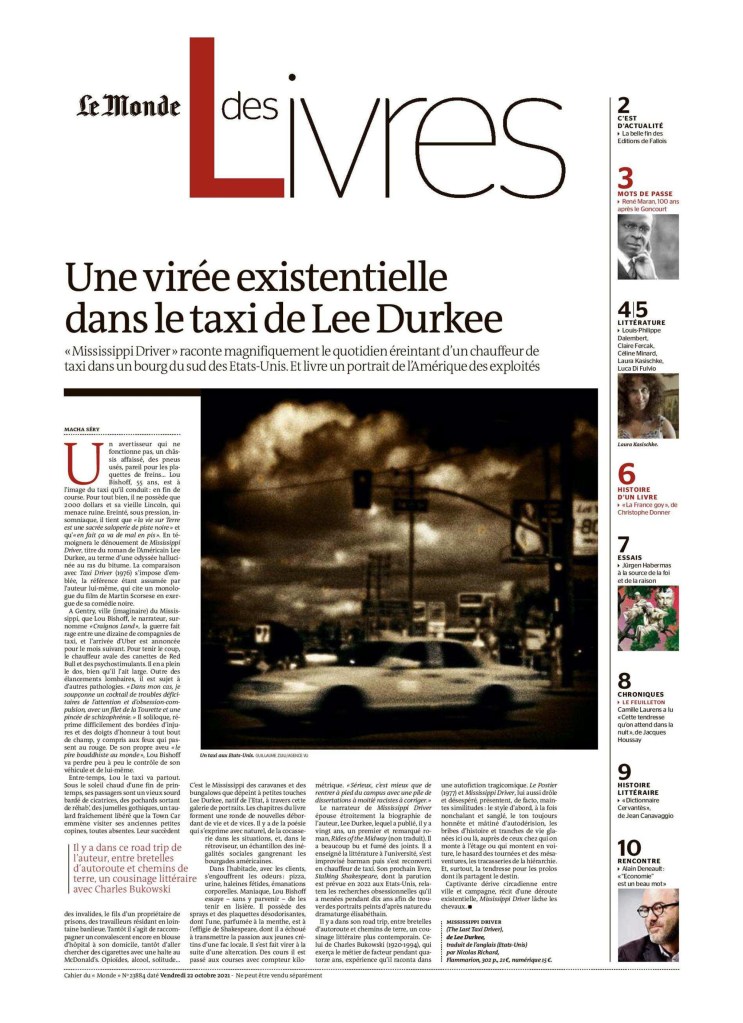
A remarkable one-day picaresque as we follow Lou on a marathon shift through a blasted landscape that’s part Denis Johnson–ish carnival of the wrecked, part Nietzschean Twilight of the Gods (or Twilight of the Taxicabs) . . . a comic sweetness and energy underneath that reminds one of Charles Portis . . . A dark pleasure. —Kirkus (starred review)
“A wild, funny, poetic fever-dream that will change the way you think about America. Durkee is a true original—a wise and wildly talented writer who knows something profound about that special strain of American darkness that comes out of blended paucity, materialism, and addiction—but also, in the joy and honesty and wit of the prose, he offers a way out. I loved this book and felt jangled and inspired and changed by it.” — George Saunders
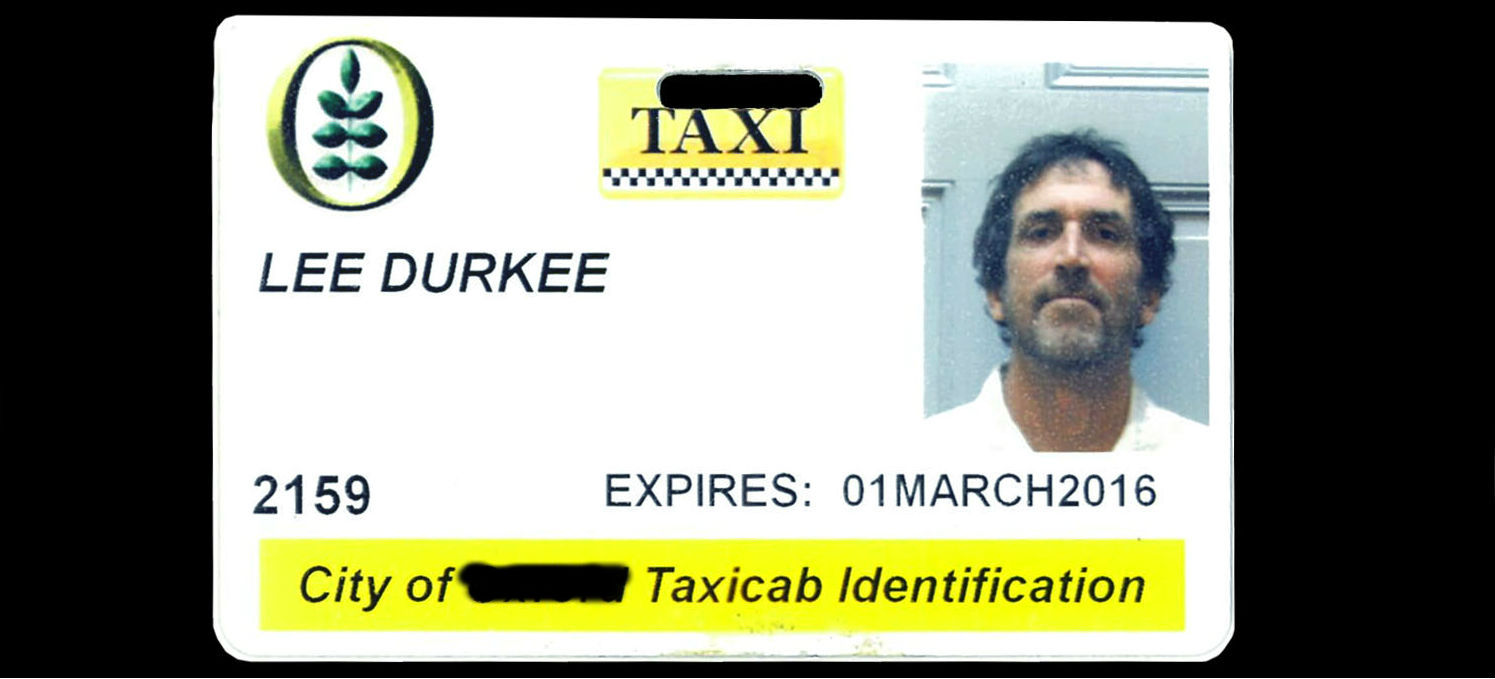
One of the best novels in recent memory . . . wildly compelling . . . . a comic masterpiece.–James McElroy The Washington Examiner
Wickly funny . . . There is depression, dirt, grit, and grist aplenty, but the novel shyly displays a bruised beauty. –Jesse Davis, Memphis Flyer
The funniest writer you’ve never heard of, but that may change. His 2001 debut, Rides of the Midway, is a 1970s coming of age masterpiece . . . Now, nearly 20 years later, at last we have Durkee’s second book, his own reboot, and wow is it worth the wait . . . a future Tom Waits vehicle if there ever was one. —John Freeman, Lit Hub Executive Editor
Blotted with jet-black humor, The Last Taxi Driver (Tin House) is the lauded authors first novel in twenty years. This ride is worth the wait. —CJ Lotz, Garden & Gun Executive Editor
Delightful and surprising . . . [a] cathartic achievement. . . . Told from Lou’s perspective, it’s a casual, voice-driven read with smart intimate humor. –Sarah Webster, Chicago Review of Books
Lou Bishoff is a hero for the gig economy . . . dark but funny as hell. —Southwest Review
The potential for violence lurks on every page and erupts in assaults sadly mundane and shockingly horrific . . . In Lou, Durkee has created a fascinatingly complex character . . . Durkee tackles race and poverty, violence of many varieties, loss and longing, and the power of the imagination. Lou’s excruciating day will make readers cringe, and the recounting of his traumas is more than unsettling. This is a dark, feverish and weird tale that remains compelling throughout. –Sarah Rachel Egelman, Bookreporter
THE LAST TAXI DRIVER is a Canterbury Tales for our time . . . Decentralized, atomized, and alternately tranquilized and jacked up on cheap beer and meth, this is the world of Beckett, Godard, Robbe-Grillet . . . The Last Taxi Driver the novel is about exhaustion. Towards the end of the book, Lou wonders vaguely “if aging boxers ever reach a point in the late rounds of lost bouts in which they enjoy being hit.” When Lou says things like that, which he does increasingly, you realize he speaks for all of us the same way the singer of a blues song does.” –David Kirby, Full Stop
A step above a must-read. –The Week
For devotees of the offbeat and grit lit writers like Larry Brown and Mary Miller. Follow the air freshener rocking back and forth, taking you under its spell, as Durkee takes you for a ride. –AV Club
A pleasure to read . . . unadorned and direct. It’s first person Lou, explaining the North Mississippi taxi business and narrating as we ride shotgun on a long, strange shift. The novel is dark, but quite funny. Lou . . . has stories to tell, stories about albino possums, UFOs, and adolescent trauma. As the day shift turns into a night run home from Memphis, with a yellow-eyed transplant surgery escapee on board and a gun under the seat, things get … well, they get darker. –Jim Warren, The Clarion Ledger
Lee Durkee’s Gentry is rooted firmly in our America. The novel almost makes other fiction in that Southern tradition seem frivolous by comparison . . .” –Jim Woster, Razorcake
Raunchy and sweet and, at times, psychedelic. John T. Edge writing in Garden & Gun
Lou might sometimes lack a sense of accomplishment, but Durkee’s prose never lacks purpose. Readers therefore will find plenty to appreciate in The Last Taxi Driver. –Split Rock Review
Lee Durkee’s novels draw upon his own hip but hardscrabble life, combining the working-class realism of Charles Bukowski with the counter-cultural flamboyance of Hunter S. Thompson . . . Yet somehow, the author creates such a vivid likeness of life that readers can’t help but feel uplifted. There’s beauty in the beastliness. Don’t miss this one. –Luckbox Magazine
AVAILABLE FROM W.W. NORTON:

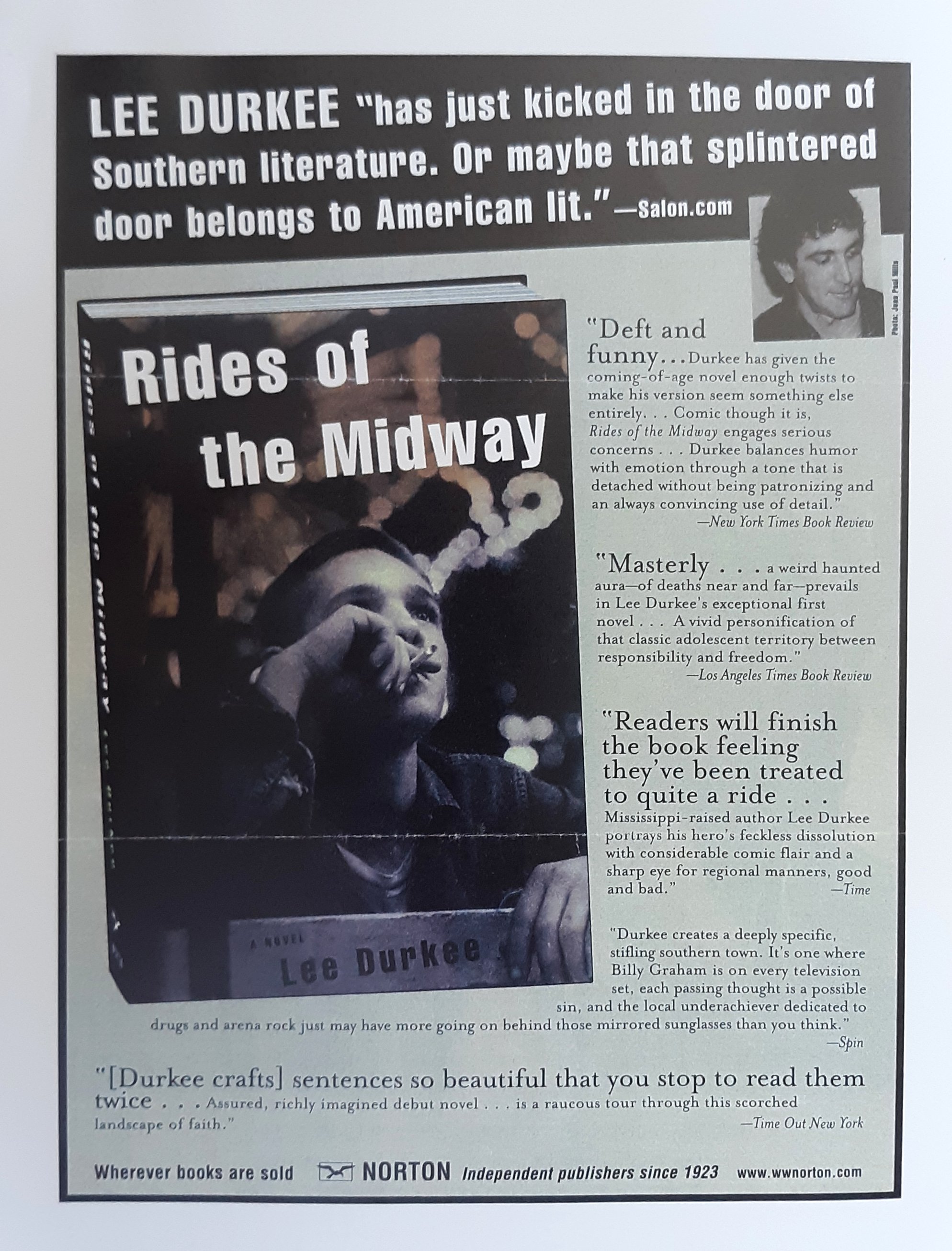


 leedurkee.com